
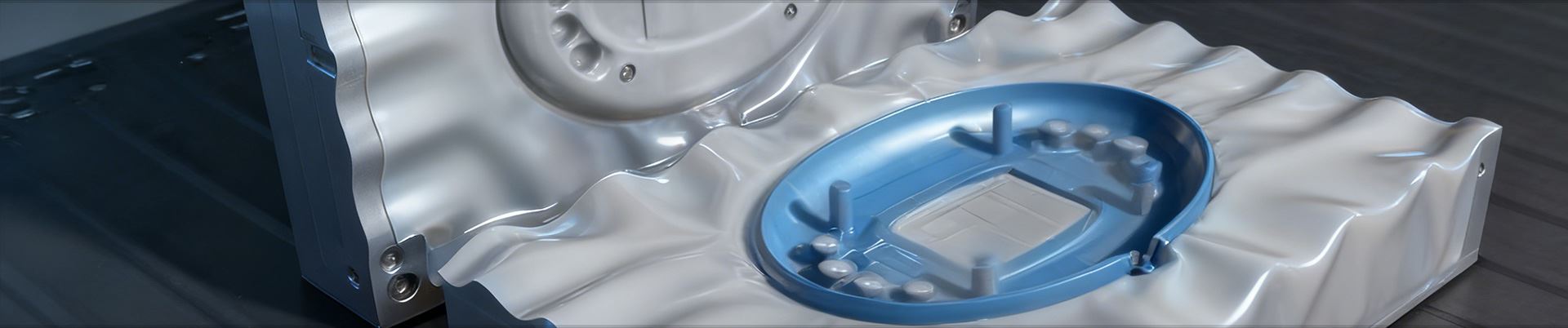
What is Vacuum Casting?
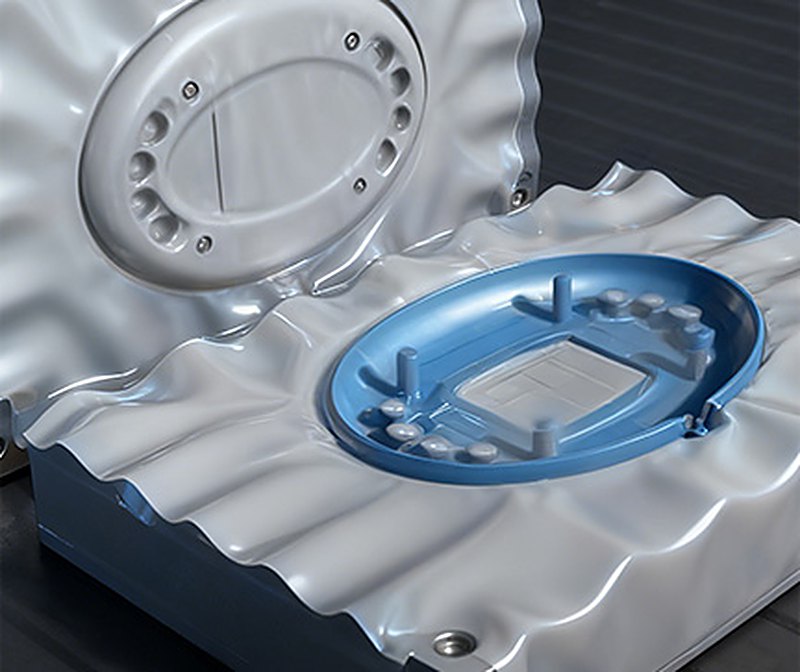
Vacuum casting — also called urethane casting or polyurethane casting — copies a master model in a silicone mold under vacuum. The master is made by CNC machining or 3D printing, a silicone mold is cast around it, and the cavity is then refilled with polyurethane (PU) resin. Because the silicone picks up every detail of the master, each copy comes out with the same surface finish and features.
It is a low-cost but reliable way to make a few high-quality prototypes. One mold yields roughly twenty copies, which suits buyers who need around a hundred parts every few months — engineering testing, proof-of-concept and pre-production evaluation, low-volume production, and sales or demonstration samples.
How Does Vacuum Casting Work?
- Master model — a high-quality master is made by CNC machining or 3D printing.
- Inspection — the master is inspected and signed off before any mold is poured.
- Silicone mold — a silicone mold is cast around the master model.
- Casting — the master is pulled from the mold, which is then refilled with polyurethane (PU) to copy further parts.
Advantages of Polyurethane Casting
- Low initial cost — no expensive hard tooling is required.
- High fidelity — the mold reproduces fine surface detail with little or no post-processing.
- Material choice — many molding polymers are available and can be pigmented to your color requirements.
- Fast to tool — molds can be ready in a few days once the master pattern is available.
- Durable enough — one mold is good for approximately twenty copies.
- Overmolding — different types and hardnesses of plastic can be molded together into a single unit.
- Pre-production volumes — a bridge between a prototype and full production.
- Market validation — short lead times let you test a design with real buyers.
Materials for Vacuum Casting
A range of polyurethane (PU) materials is available, including grades that mimic ABS, PC, PP and PE, plus rubber-like compounds for soft-touch and gasket parts.
| PU Grade | Characteristics | Typical Use |
|---|---|---|
| ABS-like | Tough, good finish | Housings, enclosures |
| PC-like | Impact resistant, transparent | Covers, lenses |
| PP-like | Chemical resistant, lightweight | Packaging, tanks |
| PE-like | Flexible, chemical resistant | Ducts, covers |
| Rubber-like | Soft touch, high elongation | Gaskets, grips |
Colors & Surface Finishing
Colors are matched to specification — either by painting from a supplied color sample or Pantone number, or produced directly in the silicone mold as with injection molding. Finishing is offered as needed: polishing, painting, silk-screen and laser engraving. Urethane casting parts can also take custom textures matching an SPI finish or an MT finish.
Applications
Vacuum casting suits engineering testing, proof-of-concept and pre-production evaluation, low-volume production, and sales samples — across consumer electronics, automotive interiors, medical devices and industrial equipment.
How to Choose a Vacuum Casting Supplier
- Confirm the master-model route — CNC or 3D printing — and the tolerance it can hold.
- Ask which PU grades and colors are available, and how color is matched.
- Check how many copies one mold yields before it has to be remade.